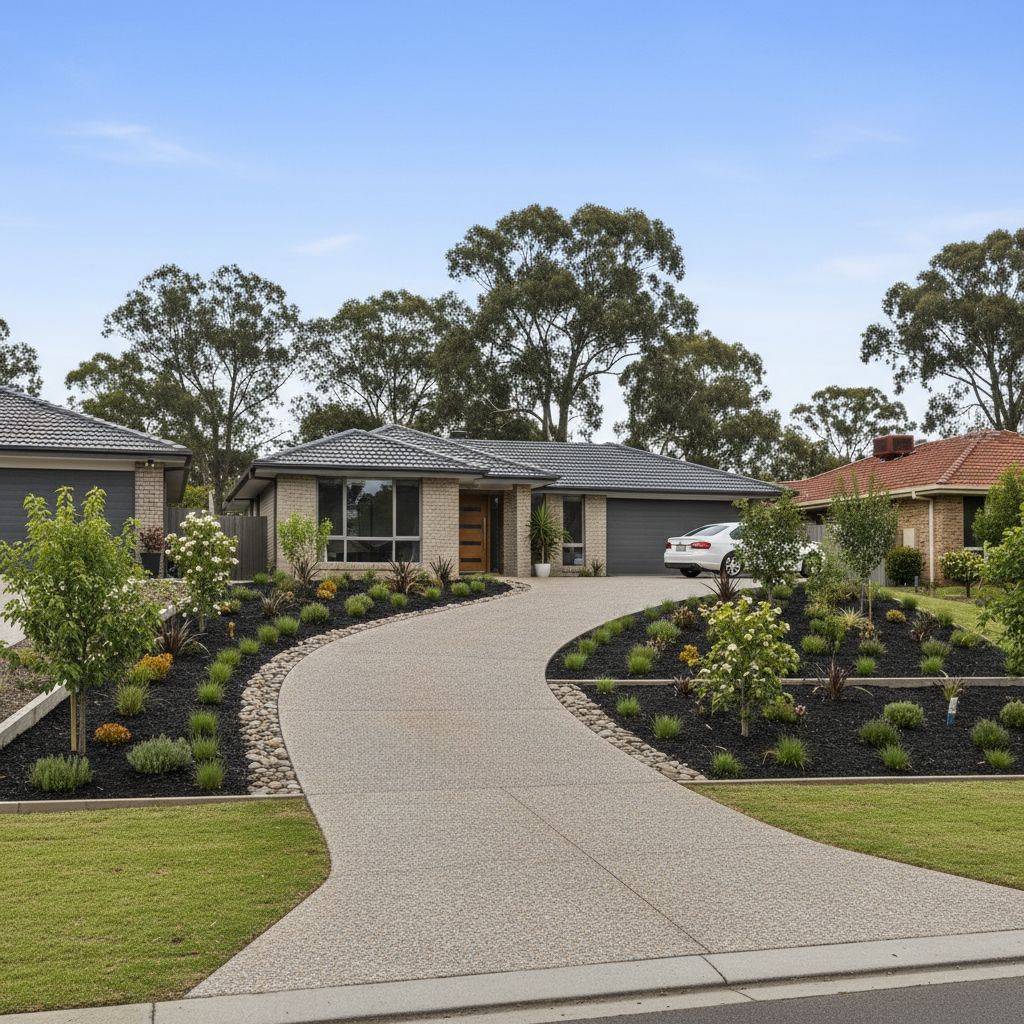
Record the pavement and the tree together
Photograph the whole driveway, the nearby tree and the affected concrete in the same set of images. Add close views of raised edges, cracks and any exposed roots, but do not excavate to improve the photograph. Record when you first noticed the problem and whether you have older photographs showing a change. A single image of a crack beside a tree is not enough to establish why the pavement moved. The assessment should consider the concrete and surrounding ground as well as the tree.
Describe the practical consequence. Perhaps a wheel catches an edge, water now sits against the garage or someone has difficulty walking from the car to the front door. These observations help distinguish an immediate access concern from an appearance complaint. Keep people away from an unsafe area and arrange an assessment appropriate to the hazard. Avoid grinding, cutting or digging as an exploratory repair before the relevant professionals have reviewed what is happening and what the tree requires.
For an established property in Wendouree, Ballarat Central or Buninyong, the tree may be one of the reasons you value the frontage. State that preference clearly when requesting advice. You may be prepared to change the driveway shape to retain it, or you may need a particular access arrangement because of the garage position. Neither preference is a technical finding. The purpose of the early brief is to make the desired outcome visible before anyone assumes removal or a straight replacement is the default.
Ask an arborist and pavement specialist different questions
An arborist can assess the tree and advise on investigation, protection and the implications of proposed disturbance. The pavement contractor or designer assesses the concrete arrangement. Ask each person to identify the limits of their advice and the information they need from the other. A quotation to replace a slab is not automatically an assessment of tree stability. Equally, a tree protection recommendation does not by itself specify a vehicle pavement. The useful outcome is a proposal that addresses both.
The International Society of Arboriculture explains that construction can damage roots through excavation, compaction and changes around the root area, and that effects may not be immediately apparent. Its guide to avoiding tree damage during construction supports obtaining advice before work begins. Do not use the canopy outline or an online rule of thumb as your own permission to excavate. Have the relevant protection requirements established for the actual tree and proposal.
Identify who owns or manages the tree. A street tree, a tree inside your boundary and a neighbouring tree raise different consultation questions. City of Ballarat's tree management information is the appropriate starting point for Council-managed trees. For other trees, ask Council which property-specific controls or approvals need checking. Avoid making a general assumption that ownership alone settles whether pruning, root work or removal may proceed. Keep any written advice with the project records.
If investigation is recommended, ask what method will be used, who will undertake it and how findings will change the design. Request a clear hold point before irreversible work. For example, the contractor may need advice after a particular part of the existing pavement has been carefully removed. Describe that as a planned decision point in the schedule. It is much harder to reconsider the alignment when equipment and a concrete delivery are already committed to a fixed pour date.
Compare layouts before choosing a construction method
Move the driveway edge away from the tree
Ask whether the access need can be met with a different edge or parking position. Draw the vehicle and pedestrian movements on the revised layout. Moving a strip of pavement may preserve the desired access without keeping every part of the old outline. However, check the consequences at the gate, garage and garden before accepting it. A tree-friendly alignment that creates an unusable vehicle turn needs further design work rather than a rushed compromise during construction.
Retain more of the existing pavement
Where the pavement assessment supports it, retaining an unaffected area may reduce the extent of disturbance. Ask which panels can remain and how the new work meets them. Do not assume every old panel must be removed to achieve a coherent result. Equally, do not retain a visibly problematic panel simply because it lies near the tree. Ask for an explanation of the proposed boundary and the limitations of the retained work, then compare those with your access and appearance priorities.
Consider a specialist alternative detail
If an ordinary replacement would conflict with the tree advice, ask whether a different pavement system or engineered arrangement should be investigated. This is a question for coordinated professional design, not a recommendation to bridge roots, raise levels or install a root barrier yourself. Request an explanation of construction requirements, ongoing inspection and any limits on vehicle use. Compare alternatives by their complete scope and long-term responsibilities, not merely the appearance of the finished surface.
Keep the do-nothing option honest as well. If the current arrangement remains under consideration, ask what monitoring or access precautions are appropriate and which changes would require reassessment. That is different from ignoring a hazard. A staged decision may be sensible where the cause is uncertain, but it should have a clear next assessment and owner. Record why work is deferred and what information is needed before deciding, rather than leaving an unresolved crack as an informal future task.
Protect the tree throughout the work, not just at the pour
Ask for construction access to appear on the same plan as the finished driveway. The excavator, delivery truck and material stockpile do not necessarily stay within the new concrete outline. Show proposed equipment positions to the arborist before work begins. A protection plan is not useful if the only available route to the rear yard passes through an area it excludes. Solve that conflict in the quotation and method discussion rather than treating the protection boundary as movable on the day.
Agree where demolished concrete, soil, formwork and other materials will be placed. It can be tempting to use a shaded area beside the tree because it looks out of the way. Ask the site supervisor to identify appropriate storage instead. Include washout and cleaning arrangements in the conversation, along with how workers will reach the work area. The protection measures should be understandable to every trade arriving on site, including subcontractors who were not present at the initial assessment.
Confirm what happens if unexpected roots or other conditions are exposed. The person operating equipment should have a named contact and a clear instruction to pause the affected work until advice is obtained. Ask how additional assessment or a revised alignment would be approved. Do not agree in advance to simply cut whatever is in the way. An explicit stop-and-review point protects the opportunity to choose a different solution when the site reveals information that could not be seen initially.
Make the interfaces between trades explicit
The quote should identify the tree advice being followed, any required supervision, the agreed excavation boundary and the pavement design responsibility. It should also identify what is excluded. If the arborist is engaged separately, ask who coordinates attendance with demolition and preparation. If Council advice is required, nominate who obtains it and where it is recorded. These are project responsibilities, not optional paperwork: unresolved coordination can affect when the work is able to proceed.
Include drainage and landscaping in the review. A driveway change may alter where water travels or how a garden bed meets the pavement. Ask the arborist and drainage designer to consider the proposed arrangement within their respective scopes. Do not assume a drain trench can follow the most convenient line without reference to the tree plan. Show irrigation changes and reinstatement levels too. Keeping these details on one marked drawing reduces the chance that a later trade unknowingly undoes an earlier protection decision.
Discuss appearance after the practical constraints are understood. A curved edge, retained panel or contrasting section may look different from the original straight driveway. Request a sketch or marked photograph showing that result. You can then decide whether the compromise suits the frontage. Do not accept a promised invisible repair without a sample and a realistic explanation of old-to-new variation. The widening guide covers the same visual question where new pavement meets concrete that is staying.
Keep the records needed after construction
Make a simple responsibility list for the proposed work: tree assessment, pavement design, approvals, demolition supervision and final review. Give each item a named person or business. If an item has no owner, resolve it before accepting a start date. This is particularly helpful when a concreter and an arborist are engaged under separate quotations. Each may reasonably assume that the homeowner is coordinating the other, so an apparently complete pair of quotes can still leave a critical site decision unattended.
Ask for the final layout, any revised tree advice and photographs of relevant work before it is covered. Keep these with the concrete handover information. If the arborist recommends follow-up inspections, record who arranges them and what observations to report in the meantime. A healthy-looking canopy immediately after a pour should not be used as the only evidence that the protection measures worked. Follow the assessment and monitoring advice provided for the particular tree.
Tell future trades about the retained tree and the agreed constraints. A later gate motor cable, garden trench or additional parking strip may bring the same conflict back in a different form. Store the plan where it can be found when those jobs are quoted. This also helps if the property changes hands: the next owner can understand why the driveway has a particular edge or why a section was retained, rather than assuming it was an unfinished part of the project.
Tree and driveway questions
Does a raised slab prove roots caused it?
No. It is an observation to investigate. Provide the history and photographs and ask the assessors to explain the likely cause and any uncertainty. Avoid ordering a tree treatment based only on the position of the nearest trunk, or a concrete replacement that leaves the cause unexamined.
Can a root barrier be included in the quote?
It can be discussed as a possible specialist recommendation, but its suitability needs assessment. Ask who specifies it, how installation affects existing roots and what outcome is reasonably expected. A product description is not a substitute for advice about the tree, ground and pavement at your property.
Should I remove the old concrete before the arborist visits?
Arrange the assessment first. The arborist may want to see the current layout and specify how any investigation or removal should proceed. Early removal can destroy useful evidence or create avoidable disturbance. Agree the sequence with the people responsible for both the tree and the pavement work.