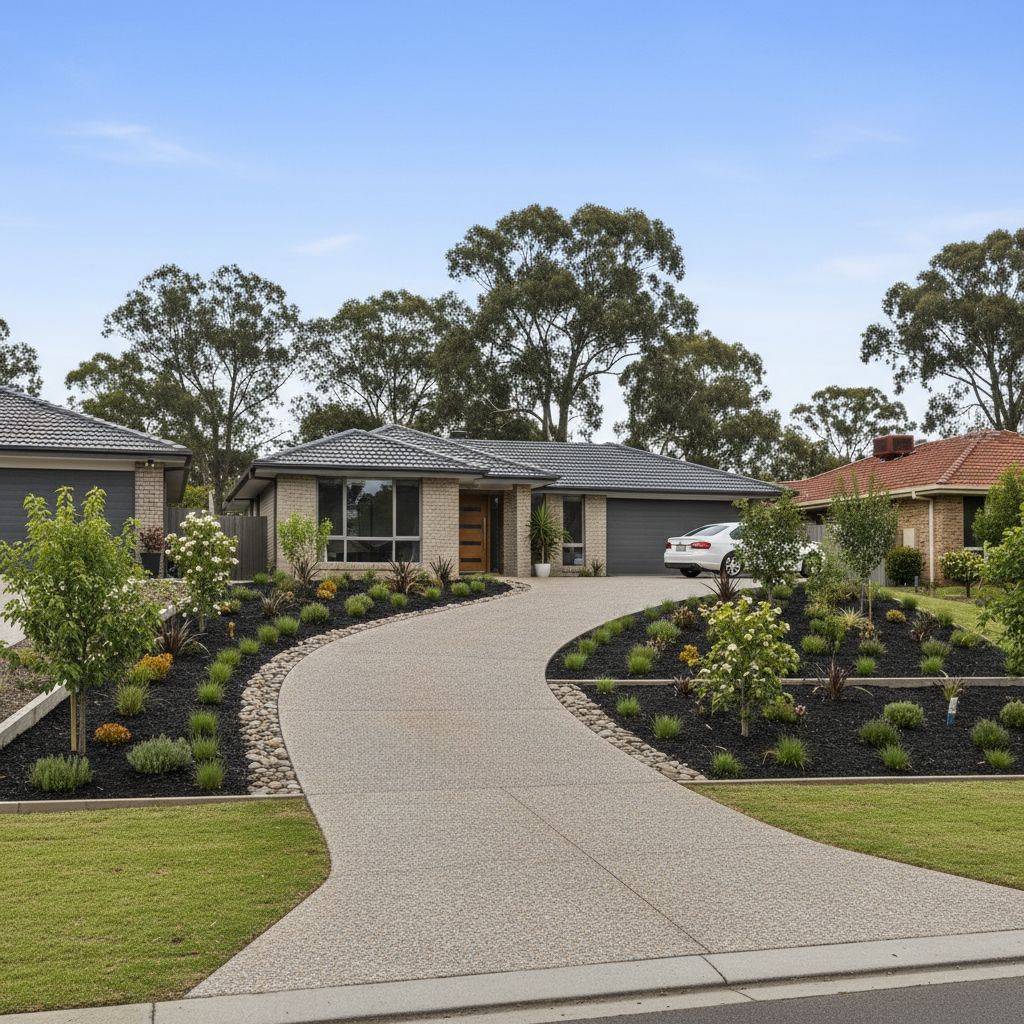
Map the route from the road to the work area
Take a sequence of photographs showing where a delivery vehicle could arrive, the entrance, every narrow point and the proposed concrete area. A photograph of the empty rear yard does not reveal the gate, stairs or tight turn that may control the job. Include the return route and possible positions for equipment. Mark anything that cannot be moved. The aim is to help the contractor assess access before choosing a placement method, not to decide the method yourself from a tape measurement.
Record the clear opening at gates and between fixed projections. Include hinges, latches, meter boxes, taps, downpipes and raised garden edging. A fence-to-wall measurement can look generous while a single projection makes the usable opening smaller. Note ground changes and overhead constraints as well as width. If a gate leaf can be removed, ask who will remove, store and reinstate it. Do not describe a removable obstacle as already resolved unless the owner and responsible contractor have agreed to that work.
For an established Ballarat home, side access may pass close to windows, a carport or a front path that the household still uses. At a new build in Alfredton or Lucas, access may instead be constrained by ongoing trades, temporary fencing and recently completed landscaping. Give the contractor the actual site condition and the expected condition on the work date. A route that is open during the quotation may be blocked once a fence, air-conditioning unit or landscape delivery arrives.
Compare placement methods against the site
Direct discharge from the delivery vehicle
Ask whether the truck can safely reach a suitable position and whether that position gives useful access to the pour. A short distance on a plan is not enough to settle this. The supplier and contractor need to consider approach, turning, ground support, clearance and departure. Do not promise access over a retained driveway, cover or lawn without having it assessed. Also identify what happens to the household's car access while the vehicle is positioned for discharge.
Line pumping along an agreed route
A line pump may be proposed where concrete needs to reach beyond direct truck access. Ask where the pump sits, how the line reaches the work area and how the operation is separated from residents. The route needs to account for corners, doorways and the places where people normally walk. Request a clear explanation of which surfaces require protection and who supplies it. A pumping allowance should describe the proposed arrangement rather than simply adding an unexplained equipment item to the quote.
A boom pump where the setup is suitable
A boom pump may be considered for some sites, but its reach is only one part of the assessment. Ask the pumping contractor to evaluate the setup position, overhead constraints and the area needed for operation. WorkSafe Victoria's mobile concrete boom pump guidance identifies risks involving ground support, outriggers, powerlines, traffic and people around the equipment. It also describes line pumping as a possible alternative where it removes a boom's powerline contact risk. The contractor must determine the suitable controls.
Other handling arrangements
On a small or constrained job, a contractor may discuss another way of moving concrete. Ask why it suits the volume, route and finish required. Do not assume a manual method is automatically simpler or cheaper because it avoids a pump. The crew, movement route, timing and protection still need coordination. Compare complete methods with the same finished scope. The best quotation explains how the work will be delivered without relying on the homeowner to provide unplanned labour or improvise access.
Check where the equipment will stand
Show the contractor inspection covers, drainage pits, recent trenches and any information about buried tanks or services. Do not use a surface photograph as proof that the ground can support equipment. The responsible contractor needs to assess the proposed setup, including what may be underneath. Ask what additional information is needed and who obtains it. Where a setup position depends on an assumption, make that assumption visible in the quote and settle it before the delivery is booked.
Identify overhead lines from a safe position and tell the contractor about them before the site visit. Do not attempt to measure clearances by approaching electrical infrastructure. Leave powerline risk assessment and the required controls to the responsible professionals. WorkSafe's guidance makes powerlines a specific planning issue for pumping operations. A site can have ample space at ground level while still being unsuitable for the first equipment option suggested from photographs.
Keep the street and footpath in the access discussion. If a vehicle, hose route or equipment setup would affect public space, ask the contractor which permissions and traffic or pedestrian arrangements are needed. City of Ballarat's road reserve and infrastructure information provides a starting point for the local requirements. Do not assume the ability to park a family car at the frontage means a construction operation can occupy the same area without further planning.
Where the route passes trees, show the access proposal to the person responsible for tree protection. The delivery method should not depend on using an area that the arborist has excluded. Include temporary parking, material storage and equipment cleaning, not just the vehicle's final position. The driveway and tree guide explains why construction access needs to be considered alongside the finished pavement layout. Changing the method early is easier than renegotiating protection boundaries when a truck arrives.
Plan how the household will use the property
List the entrances that residents need and the times they normally use them. Tell the contractor about school departures, regular support visits, deliveries and anyone who cannot easily use another route. Agree an access arrangement before work begins. A temporary path must be part of the site's planned controls, not an instruction for someone to step over a hose when the crew appears quiet. Ask who will tell residents when a route is unavailable and when it is safe to use again.
Move vehicles, bins and essential items before access closes. If the garage contains a freezer, work equipment or mobility aids, arrange access to those items in advance. Discuss pets and gates, especially when a gate needs to remain open for part of the operation. A signed quotation may describe the concrete clearly while saying little about these household constraints. Add them to the site brief so the person managing the work knows which access arrangements are essential.
Explain any shared access with a neighbour or another dwelling. The concrete contractor should know who uses the route and what agreements are required before blocking it. Keep the conversation practical: proposed dates, the affected entrance, an alternative route if available and a contact for changes. Do not promise neighbours uninterrupted access unless the contractor has confirmed how that will be maintained. Record an agreed arrangement rather than relying on a casual conversation recalled differently on the day.
Coordinate preparation, delivery and clean-up
Ask for the sequence from demolition through to reinstatement. The access needed to remove old concrete may differ from the route used to bring in the new material. A contractor might need a gate removed earlier than expected or require a retained surface to remain unobstructed until the final stage. Review these requirements together. If another trade is installing drainage or services, identify the point at which their work must be complete before the concrete placement can proceed.
Discuss the plan for a change in site conditions. A soft setup area, newly installed obstruction or unavailable public-space arrangement may require reassessment. Ask who decides whether the method remains suitable and how any cost or timing change is approved. Avoid a plan that depends on pressing ahead with an unsuitable setup because concrete has already been ordered. The quotation should make clear which information and access conditions need confirmation before that order becomes a commitment.
Agree a cleaning and waste arrangement before the pour. Ask where equipment cleaning occurs, how washout is contained and who removes the resulting waste. Identify drains, garden areas and surfaces that need protection. Do not leave the homeowner to choose a washout spot while a delivery is underway. Include restoration of gate hardware, removal of temporary protection and any repairs to disturbed surfaces in the written scope. These items determine whether the property is usable again after the concrete work ends.
Read the access assumptions in the quotation
Compare quotations using the same access information. Give each contractor the photographs, constraints and household requirements rather than showing one an empty site and another a fully fenced site. Ask which equipment, crew arrangements and protection are included. Separate a confirmed method from a provisional allowance that may change after a pumping contractor's assessment. A clear allowance is preferable to a low total that silently assumes unrestricted access you cannot provide.
Look for waiting, cancellation and additional equipment terms, then ask the contractor to explain how they apply to this job. Do not invent an allowance from another project's invoice. Ask who coordinates the concrete supplier and any pumping subcontractor and how a delivery change will be communicated. The homeowner should know the contact responsible for the day's operation. Several phone numbers on a quote are less useful than a clear statement of who manages the sequence and authorises changes.
Before the work date, walk the agreed route with the contractor or provide updated photographs if requested. Check that the gate, parking area and work zone are in the condition assumed by the quote. Keep the written household access and reinstatement arrangements available. At handover, review those items alongside the new concrete, and obtain the instructions for returning to normal use. Completing the pour is only part of completing a restricted-access job.
Restricted-access concreting questions
Can you quote access from photographs alone?
Photographs can support an initial discussion, but ask which matters require a site assessment before the method and price are confirmed. Ground support, hidden obstructions and public-space arrangements may need further information. Label an initial estimate as such and obtain the final access assumptions in writing.
Should I remove a fence before requesting a quote?
Show the fence first and ask whether removal is necessary. There may be another method, or removal may need a more specific scope than expected. If it is agreed, document permission, protection, storage and reinstatement. Removing it early can create a security or pet-containment problem without resolving the actual delivery constraint.
Does a small pour mean access is unimportant?
No. The route, equipment position and household arrangements still need to work. A small rear pad can have more demanding access than a larger open frontage. Explain the constraints early so the contractor can choose and price a suitable method rather than discovering the limiting obstacle after arrival.