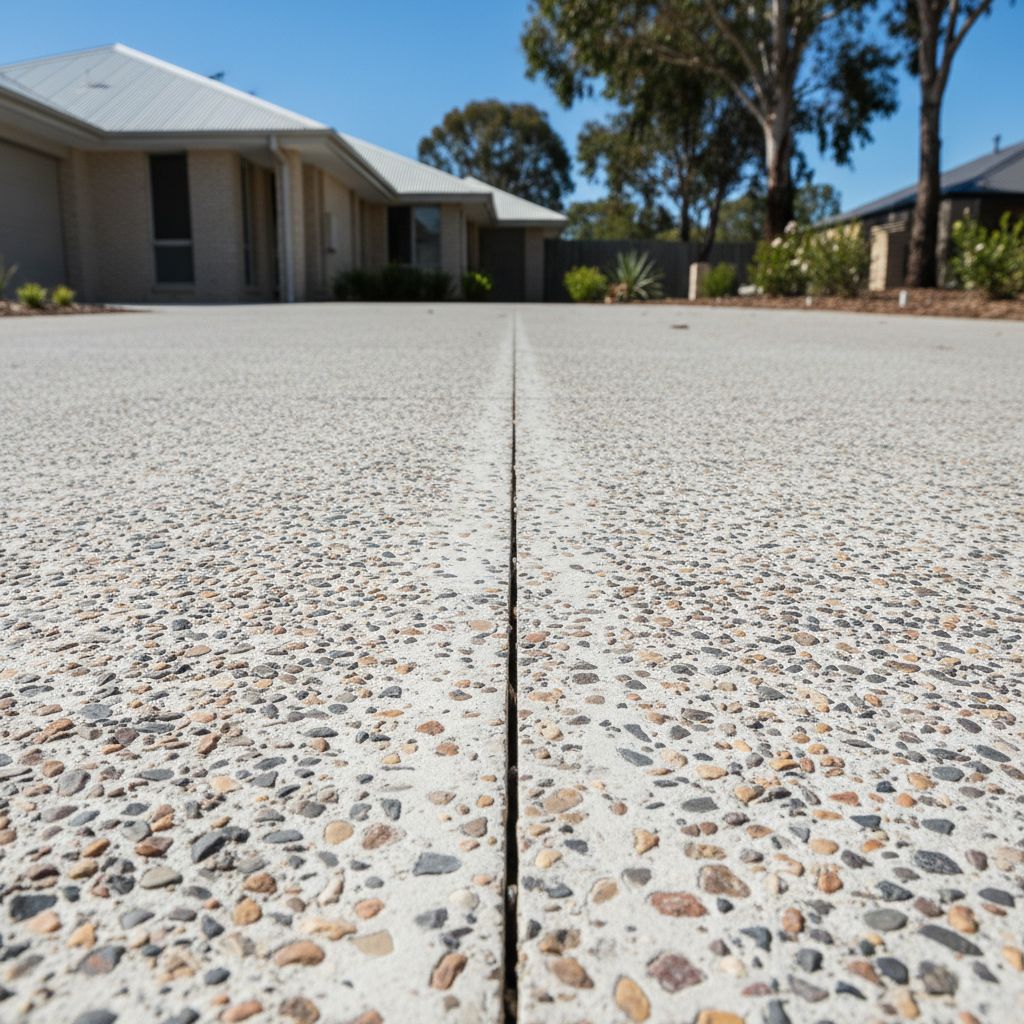
Set the visual brief before looking at colour names
List the parts of the frontage that will remain: brickwork, render, garage door, roof, front path, fence and garden edging. Then identify which of these you want the driveway to relate to most closely. Trying to match every element can make the choice harder without producing a more coherent result. A driveway can sit quietly beside the house or deliberately contrast with it. Decide which effect you prefer before comparing a large collection of similar grey or brown samples.
Separate permanent materials from things you plan to change. If the garage door will be repainted, take its intended colour into account rather than matching a finish you are about to remove. If a new fence is only a possibility, do not let an undecided future purchase control the concrete choice. Write a brief such as a muted background to the red brick, or a lighter contrast against a dark garage. That gives the supplier something more useful than a request for whatever is popular.
For a new home in Lucas or Alfredton, take the actual approved exterior selections to the discussion. For an established Ballarat house, photographs and physical samples of retained pavers can be more relevant than a current builder's brochure. Do not assume a suburb dictates a colour palette. The useful local context is your own frontage, its materials and the approvals or design conditions applicable to the property. Confirm any required design acceptance before treating your preferred sample as the final order.
Find out exactly what the sample represents
Ask for the supplier, product or mix name and finishing method to be recorded with the sample. A small unlabelled block may show an attractive surface but leave the contractor unable to order the same material. Check whether it represents plain coloured concrete, an exposed aggregate mix or a surface treatment. These are different choices. The existing coloured concrete and exposed aggregate pages provide the broader service context; this guide concerns approving a specific appearance.
Boral's Colori product information recommends making final selections from actual samples and explains that natural materials can produce variation. It also states that website illustrations are a guide rather than an exact representation of the finished product. That is a useful reason to move beyond a screen image. It does not mean every variation should be accepted without discussion; ask the supplier what variation is expected for the actual mix and finish being proposed.
Ask whether the sample is a recent representation of material available for your job. A contractor may keep an older sample because it is useful for explaining texture, while the exact mix or source materials may no longer be available. Distinguish an appearance reference from an orderable selection. If the sample is only illustrative, obtain the current proposed product information before signing. Keep a photograph of its label together with a photograph of the surface so the identity is not lost later.
Compare samples at the property, not only in a showroom
Place the samples beside the actual house materials where practical. Look from the street towards the garage, then from the house towards the driveway. These viewpoints can change which part of the frontage dominates your impression. A colour that looks pleasing beside a brick held in your hand may feel different when the driveway occupies most of the foreground. Use the sample to assess relationships, while remembering that a small piece cannot reproduce the full visual effect of a large paved area.
Keep the comparison fair. Put competing samples beside the same brick or paver, in the same position, rather than comparing one in shade with another under a bright showroom light. Look at them on separate occasions before deciding if the first impression feels uncertain. Take photographs as a record of the arrangement, but do not use those photographs as the only basis for the final decision. Screen settings and camera processing introduce another layer between the sample and what you see in person.
Consider where the driveway is visible most often. A household that enters from the garage may care about the view from the street differently from one that regularly walks across the frontage. Include the front-door route, garden edge and any adjoining paved path in the comparison. If the concrete will continue around a corner, ask whether the same appearance is wanted there. Decide whether continuity or a deliberate boundary makes more sense before the shape and joint layout are finalised.
Keep a short record of what you liked and disliked. Useful observations are specific: this sample competes with the brick colour, this stone mix looks busy beside patterned paving, or this tone relates to the garage door. An impression such as too dark is still helpful, but attach it to the sample and setting. This prevents the discussion drifting back to a rejected choice because different people remember the shortlist differently.
Review texture and sealer with the colour
Ask to see the selected colour in the finishing method you are considering. A smooth display sample is not a complete reference for a textured driveway, and a close-up of exposed stones does not show every aspect of the surrounding surface. Describe how you want the finished concrete to look from standing height as well as close up. Keep appearance and practical surface performance in the same conversation, particularly where the driveway also serves as the main walking route.
Confirm whether the sample is sealed and identify the proposed sealer product if one is included. Ask the supplier to demonstrate or explain the appearance of the complete system. Do not assume a sample has the same treatment as the quotation. If you dislike a glossy look, state that explicitly and ask what the proposed finish will look like in use. A verbal description such as natural may mean different things to the owner, installer and product supplier.
Where wet appearance matters to your choice, ask the supplier how it should be evaluated on the actual sample. Do not treat a wet photograph as a reliable representation of a sealed surface. Record the conditions under which you compared samples so that everyone understands the reference. Also ask for the selected surface system to be assessed for the location's intended use; choosing a colour does not establish that the finish is appropriate for a sloping entry or a frequently used pedestrian path.
Review joints and edges as part of the visible result. A driveway is viewed as a whole, including panel lines, borders, drain grates and where it meets the garage. Ask for the proposed joint layout on the plan before final appearance approval. If a decorative border is involved, view its sample beside the main field rather than approving them independently. This helps prevent an apparently minor late change in edging from creating a result that differs from the original visual brief.
Decide whether an extension should match or contrast
When adding concrete beside an existing driveway, locate any original order records before discussing a match. The supplier and mix information may be useful, but the retained surface also has its own exposure, wear and previous treatments. Ask for a realistic explanation of the expected difference. Avoid a contract based on the phrase exact match unless the contractor explains what that means and how it will be assessed. A shared colour name alone does not document an agreed visual result.
An intentional contrast can make the boundary easier to understand. It might follow the driveway edge, separate a pedestrian path or frame the parking area. Sketch it on a photograph and check that it follows useful shapes rather than creating awkward strips merely to hide a join. If you prefer continuity, compare the scope of replacing a complete visible panel with retaining more old work. The driveway extension guide covers the practical side of that decision.
For a repair in the middle of an existing driveway, ask to see the proposed repair boundary before approving colour. A small patch with an approximate colour may attract attention because of its shape and location. A larger deliberate panel may produce a different result, but it also changes the demolition and construction scope. Compare the options together. Do not allow the desire for a uniform photograph to obscure the reason the original concrete needs repair or the suitability of the retained slab.
Record a complete selection before concrete is ordered
A useful approval record contains the labelled sample, supplier information, selected finish, proposed sealer and a drawing showing where each selection applies. Include the agreed expectations about variation and old-to-new matching. Nominate who can approve a substitution if the selected material becomes unavailable. An installer should not have to choose between apparently similar colours while a delivery is being arranged. Confirm changes in writing and revisit the sample if the change affects the appearance you approved.
Ask how the completed appearance will be reviewed and at what stage. Freshly placed concrete, a surface still undergoing the specified curing process and the finished treated surface should not be casually treated as identical reference conditions. Obtain the contractor's instructions about when and how to assess the work. If something concerns you, record photographs and contact the contractor before applying a cleaner, coating or additional sealer. An unagreed treatment can complicate the assessment of the original work.
Keep the product and colour information after handover. It will help when you discuss a future extension, repair or surface treatment, even if an exact visual match cannot be promised. Store the records with the driveway plan rather than relying on a photo album caption such as grey concrete. The selection process is successful when you know what was ordered, why it was chosen and what appearance was reasonably agreed, not simply when everyone remembers liking a small sample.
Questions about driveway colour approval
Can a photograph of another driveway be my specification?
Use it to explain an idea, then ask for the actual material and finish to be identified and sampled. A photograph may not show the sealer, lighting or age of the surface. Record the aspects you like, such as a muted background or contrasting border, rather than assuming the image is an exact product reference.
Should everyone in the household approve the sample?
Identify the person authorised to make the final selection, but let regular users compare the shortlist before that decision. This is particularly useful where appearance preferences differ. Record one final approved selection so the contractor receives a clear instruction rather than several conflicting messages during the work.
What if the supplied sample and brochure disagree?
Ask the supplier to explain which is the appropriate reference for the proposed job and obtain the answer before ordering. Check product identity, finish and treatment rather than assuming one image is simply inaccurate. If the difference changes your preference, pause selection until you have a reference you understand.